
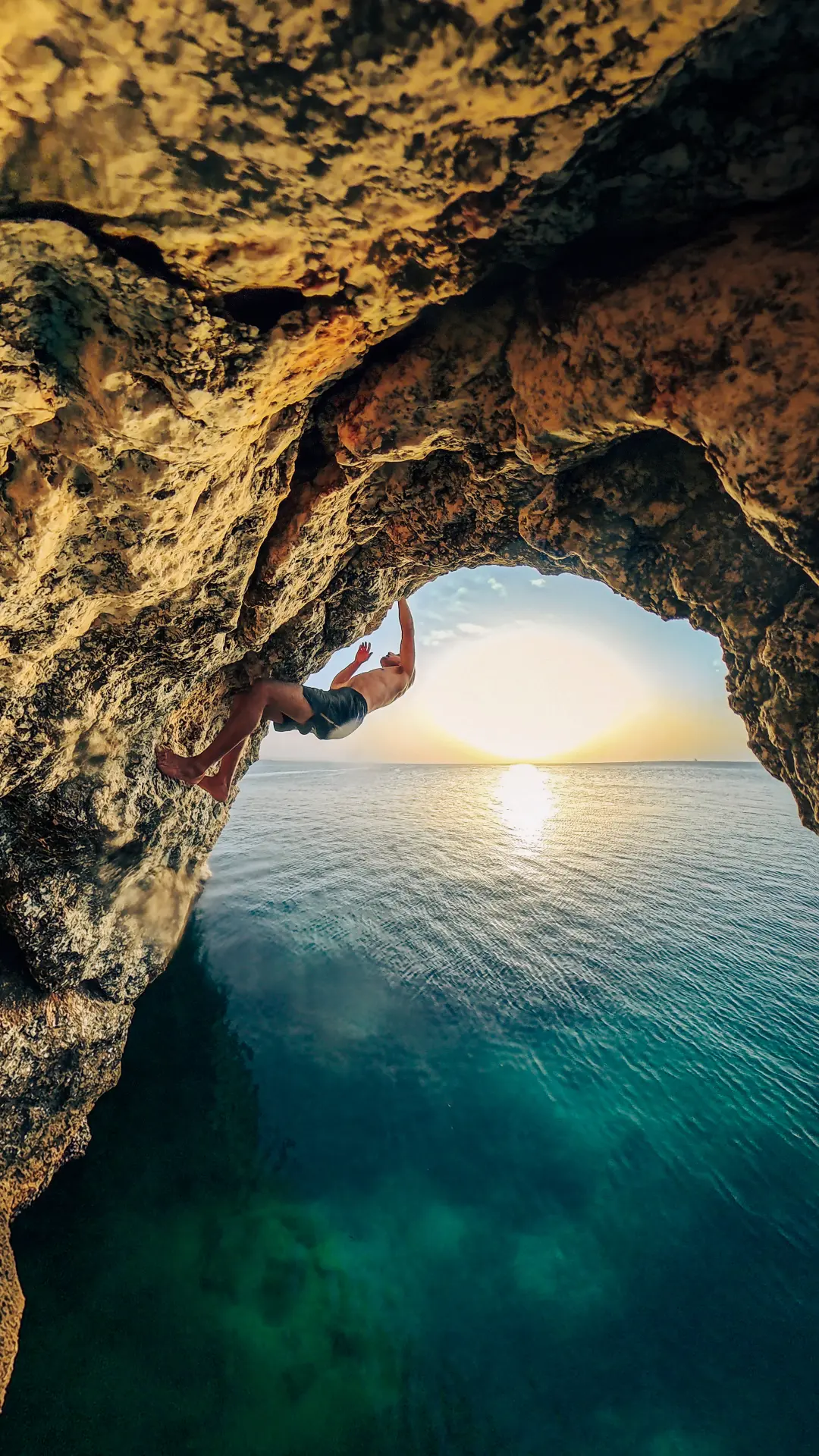
Deep Water Solo (DWS) — also known as psicobloc — is one of climbing's most liberating disciplines. No rope, no gear, no partner system required: just you, the rock, and the ocean below. When you fall, you swim. It's that simple, and that addictive.
Oman is quietly becoming one of the world's premier DWS destinations. The Musandam Peninsula and the coastline around Muscat offer dramatic limestone walls dropping directly into warm, clear water — a setting that rivals the legendary DWS crags of Mallorca and Thailand. Whether you're a beginner looking for your first waterline jug haul or an experienced climber chasing long, technical face routes above deep blue swells, Oman delivers.
Is DWS for Me?
If you've never tried Deep Water Solo before, here's an honest breakdown:
You'll love it if you enjoy climbing outside, aren't afraid of open water, and like the idea of a consequence-free fall. DWS removes the psychological overhead of gear — no clipping, no belayer, no managing a rope. Many climbers find it the most freeing form of the sport.
You'll be comfortable from day one if you can swim confidently and climb at around 5a/V1 or above. Most crags have easy, low-height routes right at the waterline that are ideal for getting a feel for the format.
A few things to be honest about: Falls from height into water are not always gentle, especially if you're not falling cleanly. Above roughly 10–12 metres, a poor entry can hurt. Most DWS routes keep you in a safe height range, but it's worth knowing your limits and building up gradually.
Bottom line: If you can swim and you've climbed outdoors before, DWS is very accessible. Most people are hooked after their first session.
Seasons
Oman's DWS season is remarkably long — you can climb year-round, though the experience varies significantly by time of year.
March–May and September–November are the prime windows. Water temperatures are comfortable, air temperatures are manageable, and conditions are generally calm. These months offer the most well-rounded experience for climbers of all levels.
Winter (December–February) brings cooler air, so aim for walls with good sun exposure to stay warm between burns. The water is cooler but still swimmable.
Summer (June–August) is hot — often extremely so. Focus on shaded walls and plan sessions around sunrise or the hour before sunset when temperatures drop and the light turns golden.
What to Bring
Essential Gear
- Climbing shoes — Always wear shoes, both to protect your feet from sharp rock and to keep holds dry for other climbers.
- Liquid chalk — Sufficient for most routes; applies well to damp skin when hands are thoroughly dried first.
- Dry chalk and chalk bag — Essential for longer routes and performance climbing where friction matters. Bring multiple bags — standard cloth bags take 45–60 minutes to dry in the sun between uses.
- Towels — Dedicated hand towels for wiping your hands dry before chalking up. This is non-negotiable: chalk doesn't bond to wet skin.
- Dry bag — Essential for keeping your phone, keys, snacks, and anything else you don't want soaked. On boat trips everything is at risk from spray; at swim-access crags you'll need somewhere to leave gear while you're on the wall.
- Fresh water — More than you think you'll need. Salt water from swimming is dehydrating, and there's no fresh water source at the crag.
- Snacks — You'll burn through energy quickly between swims and burns.
- Swimwear
- Life jacket — If you're not a confident open-water swimmer, bring one. There's no shame in it, and it lets you focus on climbing rather than survival.
Chalk Bag Tips for DWS
Standard chalk bags are effectively single-use per session — once wet, they need to dry completely before they'll work again. A few workarounds:
- Plastic bag liner hack: Slip a small plastic bag inside your wet chalk bag and fill it with dry chalk. It works in a pinch.
- DWS-specific chalk bags: Made from plastic with no fabric lining, these dry in about 10 minutes or can simply be wiped with a towel. The Mammut Sender Light chalk bag is a well-regarded option.
Photography & Video
DWS is one of the most photogenic forms of climbing — dramatic walls, clear water, and the splash of a fall make for great content. A few tips:
- A waterproof action camera (GoPro or similar) mounted on a float or held by someone in the water captures falls beautifully from below.
- Underwater shots of the swimmer after a fall are surprisingly striking and easy to get.
- On boat trips, a dedicated photographer on deck with a zoom lens gets the best wall shots without getting wet.
- Keep cameras in a dry bag between uses — salt spray is hard on electronics.
Tides and Weather
Check conditions before you leave, not just the morning of.
- Tides: Plan your session within ±2 hours of high tide. This ensures a safe water depth below most routes. Some climbs become dangerous at low tide — if in doubt, ask a local guide before committing.
- Wind and swell: Wind creates waves. A 1-metre swell sounds modest until you're trying to step off a boat onto a hold at head height. Spots with natural protection from prevailing wind can stay calm even when the open sea is choppy. Check a dedicated swell forecast (Windy.com works well for the Omani coast).
Safety
A few principles that keep DWS enjoyable for everyone:
- Never climb directly above or below another climber. A falling climber can land on a swimmer or someone traversing below — maintain clear separation at all times.
- Don't swim beneath a climber who is on the wall.
- Always wear climbing shoes — bare feet damage holds and leave them wet and slippery for the next person.
- When starting from a boat, designate a spotter whose sole job is to ensure you don't fall onto the vessel during the initial moves. A fall into the hull is the one injury DWS can't absorb.
- Climb with locals who know the area. Low-tide conditions, hidden submerged rock, and swell patterns are local knowledge — it's worth tapping into.
Spots
🌟 Highlighted spots: Muscat – Qantab and Muscat – Ras Al Hamra are our top recommendations — exceptional rock quality, well-documented routes, and suitable for all levels.
⭐ Muscat – Qantab
Arguably the highest-quality DWS sport climbing venue in the region. Qantab offers long, sustained routes designed to be climbed dry with chalk — a rarity in DWS, where most climbing happens straight out of the water. The best access is by speedboat, a 15-minute ride from shore to the base of the walls.
The variety here is exceptional: juggy roofs, low traverses, technical face climbing, and unusual features across a wide range of grades. Beginners will find welcoming entry-level lines; experienced climbers will find problems worth projecting.
Grades: 5a–7c+
An official guidebook is available on Rakkup.
Location: Qantab Beach, Muscat Access: Speedboat from Qantab (recommended) or by arrangement with local operators
⭐ Muscat – Ras Al Hamra
The most accessible DWS venue in Oman — no boat required. Simply swim out to the base of the routes and start climbing. For routes that benefit from chalk, a kayak or SUP makes a practical platform.
Ras Al Hamra is considered a low-ball, beginner-friendly crag, but the rock quality here is the best on the Muscat coast. The variety of routes suits climbers at most levels, and the swim-access format makes for a relaxed, low-commitment session.
Grades: V0–V7 (bouldering scale)
The crag sits about 1.4 km from the small public beach northeast of the Crowne Plaza Hotel — a comfortable paddle on flat water. Once there, you can anchor your kayak or SUP and traverse the clifftop to access routes from above, use it as a launch platform, or simply swim straight in from the water.
An official guidebook is available on Rakkup.
Location: Northeast of Crowne Plaza Hotel, Muscat Access: 1.4 km kayak/SUP paddle, or direct swim for confident open-water swimmers
Dibba (Musandam Peninsula)
The closest DWS destination for climbers based in Dubai, Sharjah, and the northern UAE. The climbing areas sit 1–2 hours offshore from Dibba Port, typically accessed by chartering a large dhow. The trip works best as a group — 20 to 30 people is the norm to split charter costs into something reasonable.
While routes here are largely undocumented in print guidebooks, a wealth of high-quality topos and updates have been compiled by the local climbing community. The most complete resources and maps are hosted at Toby Foord-Kelcey's UAE Climbing Archive.

Topo & guidebooks:
- UAE Climbing Archive (foordkelcey.net)
- elstyx.net: Overall Musandam South DWS Map
- elstyx.net: Topo First Bay PDF
- elstyx.net: Topo DWS The Cracks PDF
- foordkelcey.net: Read Stack DWS (2012) PDF
- foordkelcey.net: Shark Bay DWS (2012) PDF
- foordkelcey.net: The DWS Update (2011) PDF
- foordkelcey.net: Toby Foord-Kelcey - The Pyramid (2010) PDF
- foordkelcey.net: Ancient Alpine Club notes on Musandam PDF
- foordkelcey.net: DWS Dibba Map (2011) PDF
Grades: Mostly easy to moderate, with longer traverses possible at the waterline.
Access: Dhow charter from Dibba Port (Oman side). Full-day trip. Coordinate with the UAE climbing community for group departures.
Psicobloc Oman Festival
Qantab hosts an annual Deep Water Solo festival, now in its third year, run by @psicobloc_oman. It's one of the better climbing events in the region — a few days of guided boat sessions, route setting on fresh lines, evening hangouts, and an open atmosphere that welcomes climbers of all levels.
Expect chartered dhows ferrying climbers to the best Qantab walls, a relaxed competition format, and a community that mixes Oman-based regulars with visitors flying in from across the Gulf, Europe, and beyond. Follow @psicobloc_oman on Instagram to stay across dates and registration.
Final Notes
Deep Water Solo is one of the most rewarding ways to spend a day on rock. Oman offers warm water, dramatic limestone, and a small but passionate community of climbers happy to share the lines. Whether you're flying in for a long weekend or basing yourself in Muscat for a longer trip, the combination of accessibility and quality is hard to beat.
If it's your first time, climb with someone experienced — local knowledge of tides, access, and route lines changes the day significantly and keeps you safe.
Respect the rock, respect the water, and respect other climbers in the sea. Pack light, chalk smart, and check the tides.